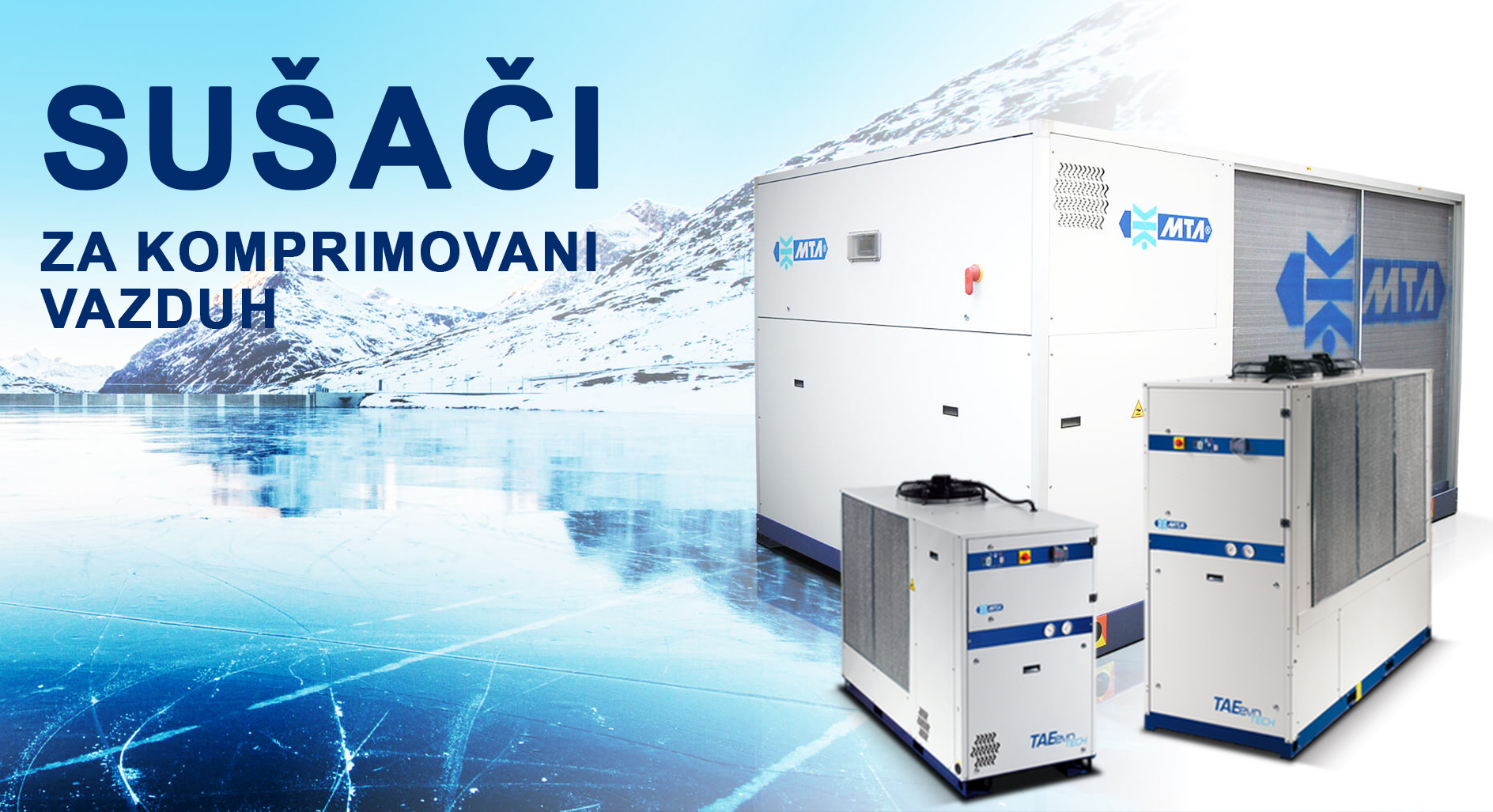

Chillers are refrigeration units that produce cold water for cooling spaces or production processes. Chiller condenser units can be air-cooled, water-cooled or a combination of both.
This short reminder is about water-cooled chiller condenser units.
All chillers used in air conditioning and industry that are exposed to outside temperatures below 3 °C on cold days must be properly prepared for the coming winter. The first step is to check the glycol concentration in the system.

011. Winterising chillers that do not run in winter
These units require the water to be drained from the system (cooler). It is also recommended to fill the chiller with a mixture of glycol and water. This prevents freezing and the formation of ice on the heat exchanger, pump, tank and valves.
022. Winterising chillers that run in winter

For these units, check the glycol concentration in the coolant. Glycol concentration tables will help you determine the right concentration for given temperatures, and a refractometer will let you check the glycol level in the system.

033. Keep condenser coils clean and free of snow and ice
Ice and snow can damage fan blades and block airflow through the condenser, reducing the chiller’s cooling capacity.

044. Check high-side pressures manually
In extremely cold ambient conditions, high-side pressures can drop. If your chiller has no low-ambient control, such as fan cycling or a flooded condenser, it may not be able to operate properly. In that case, if the temperature falls below the nominal high-pressure (HP) temperature, airflow through the condenser coil and fan should be blocked by wrapping them in plastic film or blocking the flow with cardboard. This is certainly not a “high-tech” solution, but it will serve as a temporary fix during unusually low temperatures.

055. Keep the pump running
While the chiller is running, your process most likely provides enough warm water to keep the fluid above freezing or above the glycol’s freezing point. At night or when the process is idle, however, the water temperature can drop sharply. Keeping the pump running adds the heat the pump gives off and heat from the room – and moving water freezes much later than standing water.

066. Plan ahead
The best way to prepare your chiller for winter is to plan ahead. When choosing and buying a chiller, make sure you include the cold-weather option. Do your winter maintenance by the end of September: if adjustments or corrections to the system are needed, there is enough time between then and the first very cold days.