Several factors determine how your compressor will perform in hot summer weather. The amount of air available to cool the compressor is one of the most important.
Air-cooled compressors are cooled by an internal fan that pushes or pulls air over a radiator-style cooler. Compressor specifications always state the airflow (in CFM) and the allowable static pressure (in inches of water column) – for example, 8000 CFM @ 0.25” H2O.
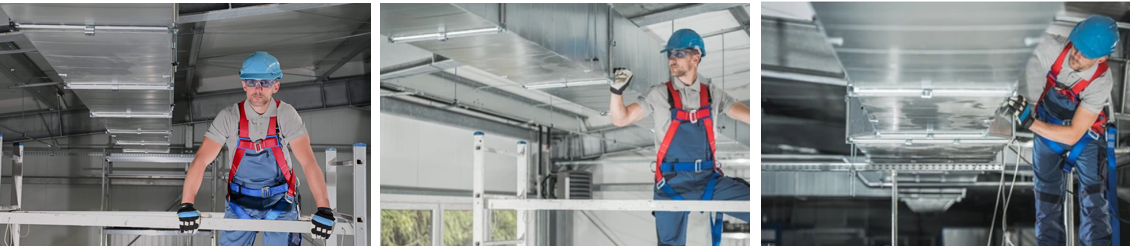
To maintain optimal cooling, the compressor must be installed where this airflow can actually take place. If it is connected to a ventilation duct, the duct must be sized so that the pressure drop in the ducts (inlet and outlet) stays below the maximum allowable pressure. If the ducts are too small, an auxiliary fan may need to be added.
01How much heat does a compressor release?
If the compressor stands in an open room, the room must be large enough to dissipate the heat the compressor generates. A compressor rejects roughly 2,500 BTU/h per horsepower, so a 100 HP compressor will radiate 250,000 BTU/h into the room.
If the room is not large enough to dissipate the heat, an exhaust fan (and possibly intake louvres) will need to be added. A common mistake is to size the exhaust fan the same as the compressor fan. Most compressors raise the temperature of the air passing through the cooler by 10 °C.
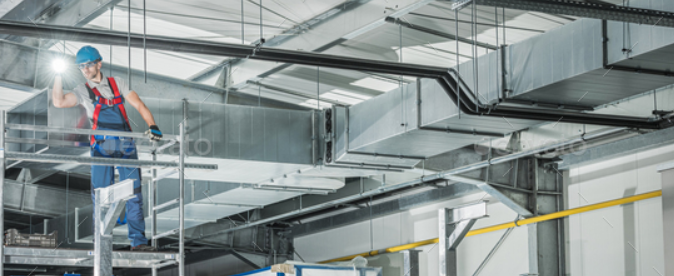
02Size the exhaust fan correctly
If the exhaust fan removes only the same amount of air, the temperature in the compressor room will rise by 10 °C over time. If nothing, or too little, is done about room ventilation, the ambient temperature around the compressor will eventually exceed the reference value and the compressor will shut down – which is, of course, unacceptable. If the exhaust fan is sized 2 to 3 times larger than the compressor fan, the temperature rise in the compressor room will be only 3–5 °C, which is much better for the compressor and the other equipment in the room.
03Other factors to consider
The exhaust fan should be installed high in the room, while the intake louvres should be low. This supports the natural upward flow of heat – most compressors release heat from the top. If possible, the intake and exhaust openings should also be on different walls.
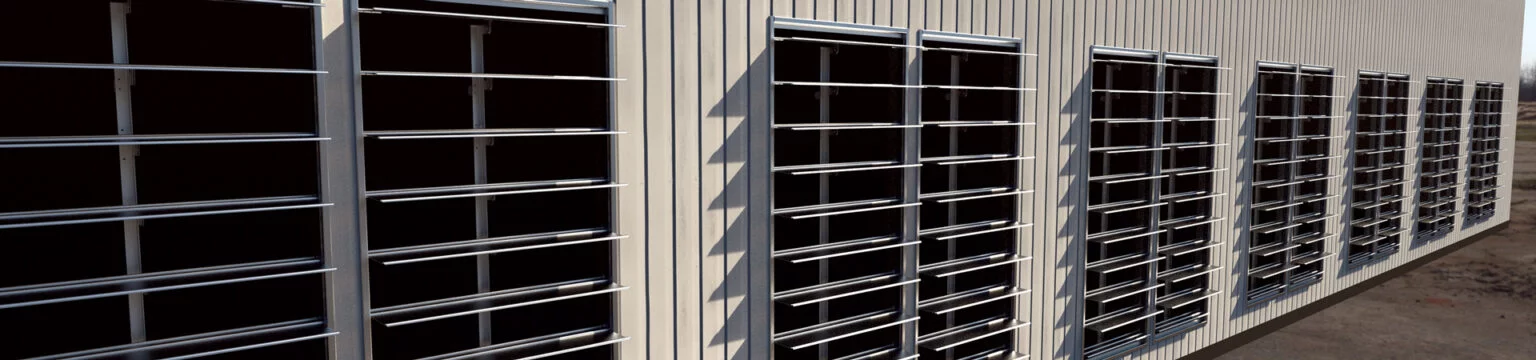
There are many things to consider when installing your air compressor. Proper ventilation will prevent unnecessary shutdowns and extend the service life of your compressor.