01Fixed speed + variable speed = a winning combination
In shift work at production plants, production lines are typically used to different extents in different shifts.
There are many possible combinations, depending on a range of internal factors, but let us take as an example a plant running at full capacity in the first shift and at reduced capacity in the second and/or third shift.
When a compressed air user has only one fixed-speed compressor, that compressor must be sized for maximum air consumption – but the same compressor then becomes a point of inefficiency in the less loaded shifts.
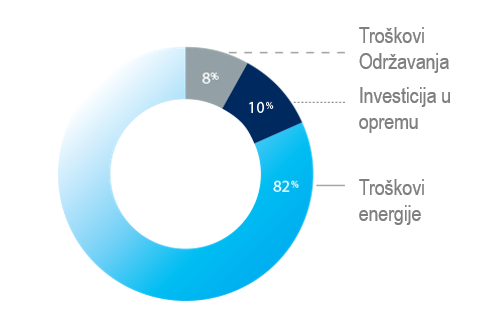
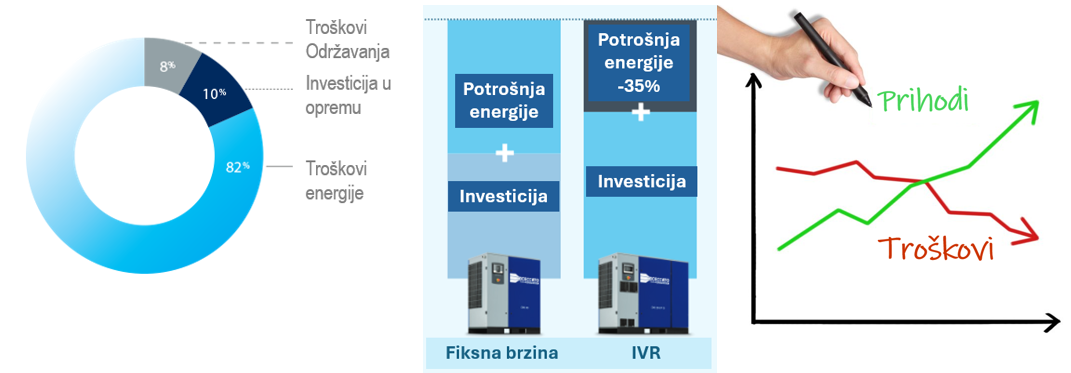
Compressed air is the second most widely used energy carrier in industry (right after electricity), and energy cost is a significant part of the product price (alongside raw materials and labour). That makes the direct link between the resources invested and the final product price clear – a link that makes you more or less competitive on the market.
Combining a fixed-speed screw compressor with a variable-speed compressor brings a number of benefits that can significantly improve the performance and efficiency of your compressed air system.
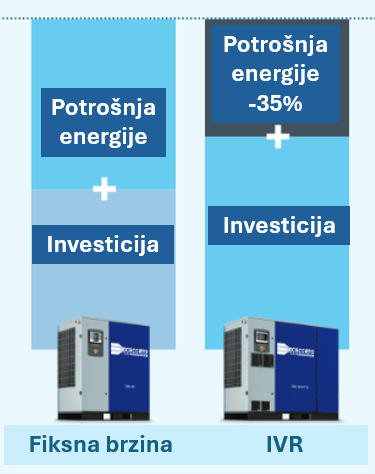
Below are the most important benefits of combining a fixed-speed compressor with a variable-speed one:
1. Continuous air supply
The fixed-speed screw compressor (with a fixed-speed electric motor) ensures a reliable air supply in the base consumption range. This means the compressor will deliver the required amount of air even under constant load.
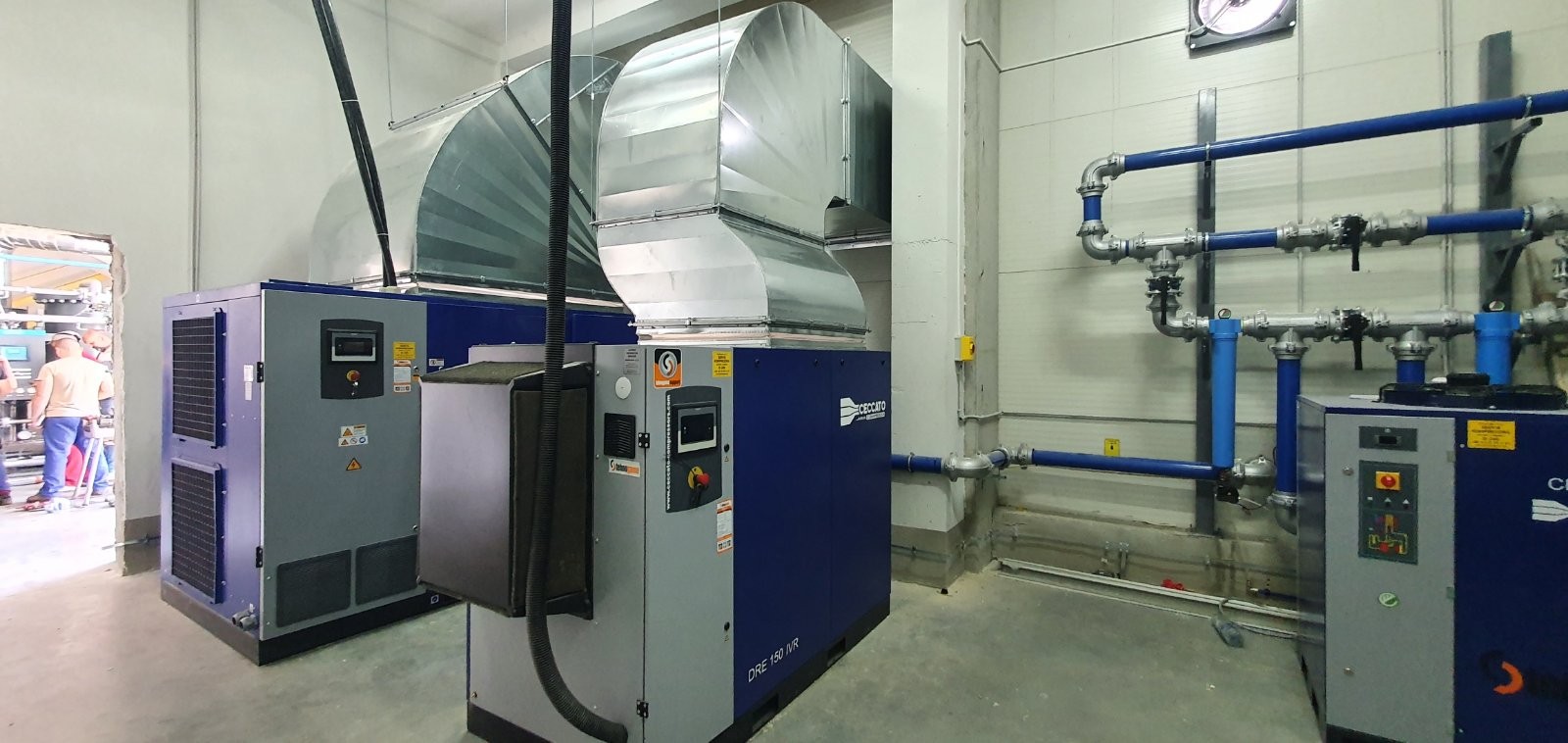
2. Efficient handling of variable load
The variable-speed compressor adapts to changes in air consumption by regulating motor speed. When air demand drops, it automatically reduces motor speed, lowering energy consumption and costs.
3. Optimised energy efficiency
Combining a fixed-speed and a variable-speed screw compressor allows system-level control to achieve maximum energy efficiency. When a higher load is needed, the fixed-speed compressor takes on most of the work, while the variable-speed compressor keeps energy consumption optimal at lower loads.
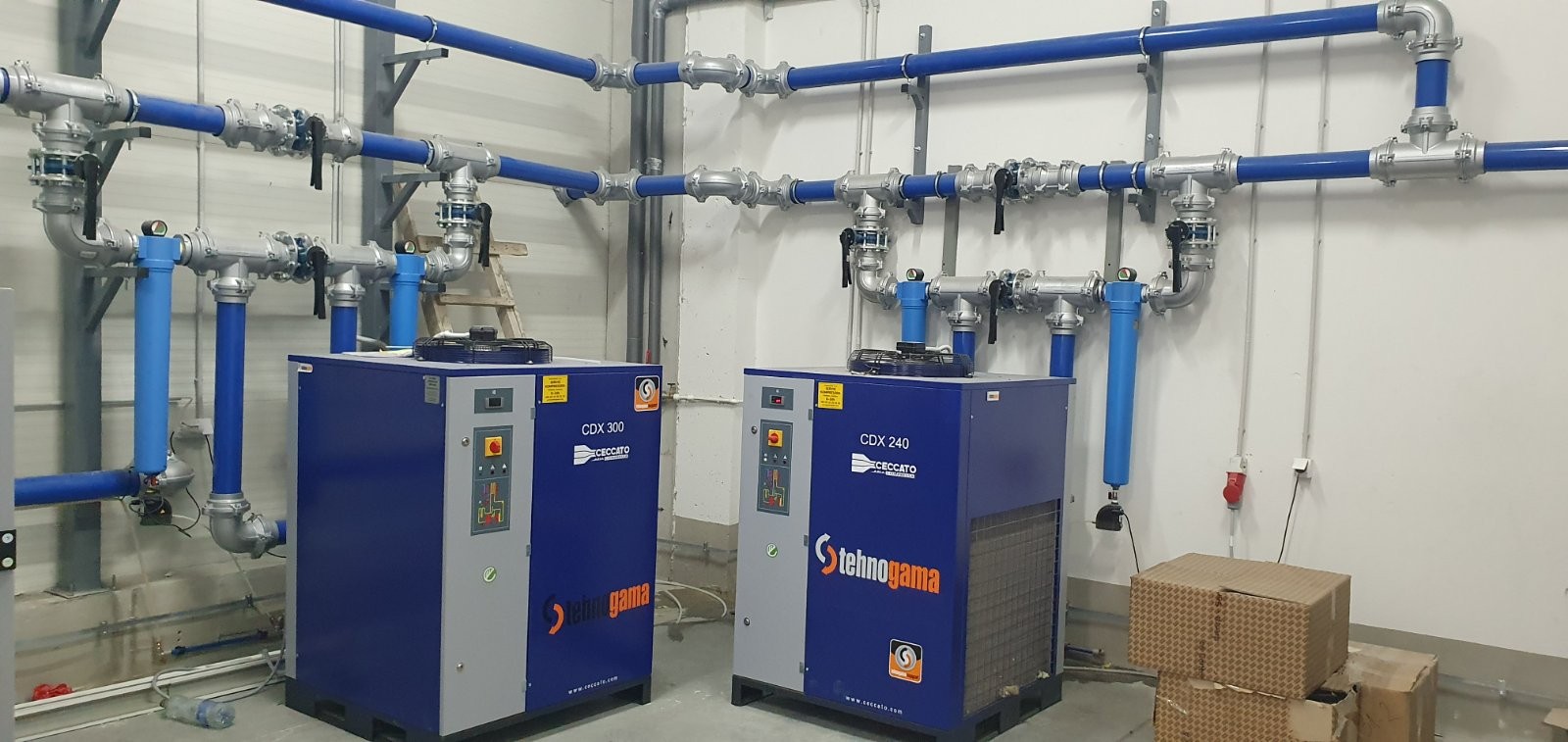
4. Lower maintenance costs
The fixed-speed screw compressor, running in the base range, needs less maintenance than a compressor working under variable loads. This reduces the need for frequent maintenance and extends the life of the equipment.

5. Better system reliability
With a combination of a fixed-speed and a variable-speed screw compressor, the compressed air system becomes more reliable. The fixed-speed compressor ensures continuous supply, while the variable-speed compressor adapts to the system load, minimising the risk of overload or air shortage.
6. Adaptability to changing needs
The system combines the advantages of both compressors to adapt to the changing needs of production or processes. This flexibility allows efficient use of resources and optimised system performance.
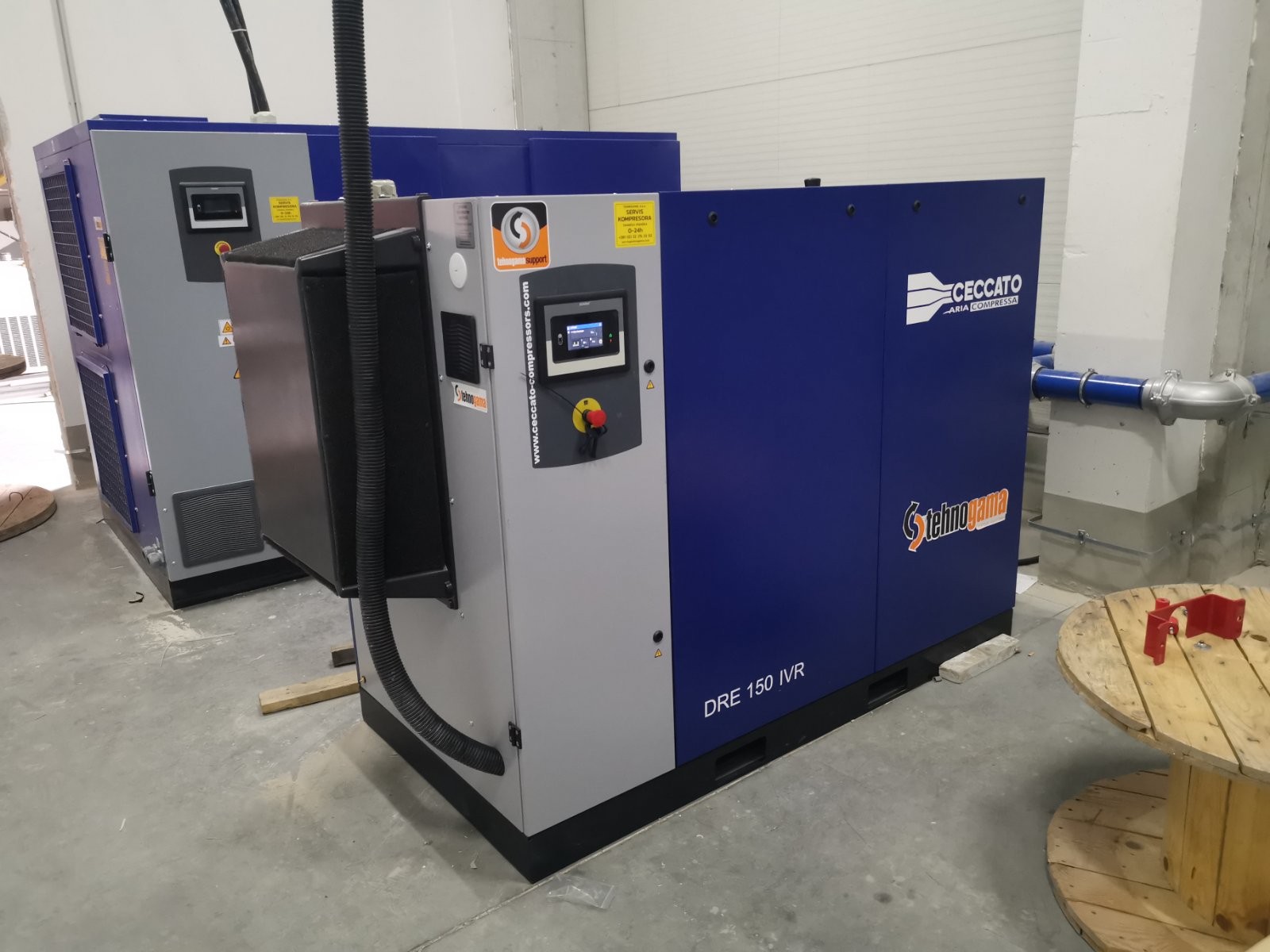
Overall, pairing a fixed-speed screw compressor with a variable-speed screw compressor brings significant benefits in energy efficiency, system reliability and lower operating costs, resulting in optimal operation of the compressed air system.