Air compressors are used in many applications and supply essential compressed air to many businesses and professionals with different compressed air needs.
No matter how many l/min an application needs or what compressor power is required, the electronic controller on a screw compressor is the motherboard that makes sure your compressor runs as efficiently as possible. The controller is your “eyes” into the machine.
01Features common to all controllers
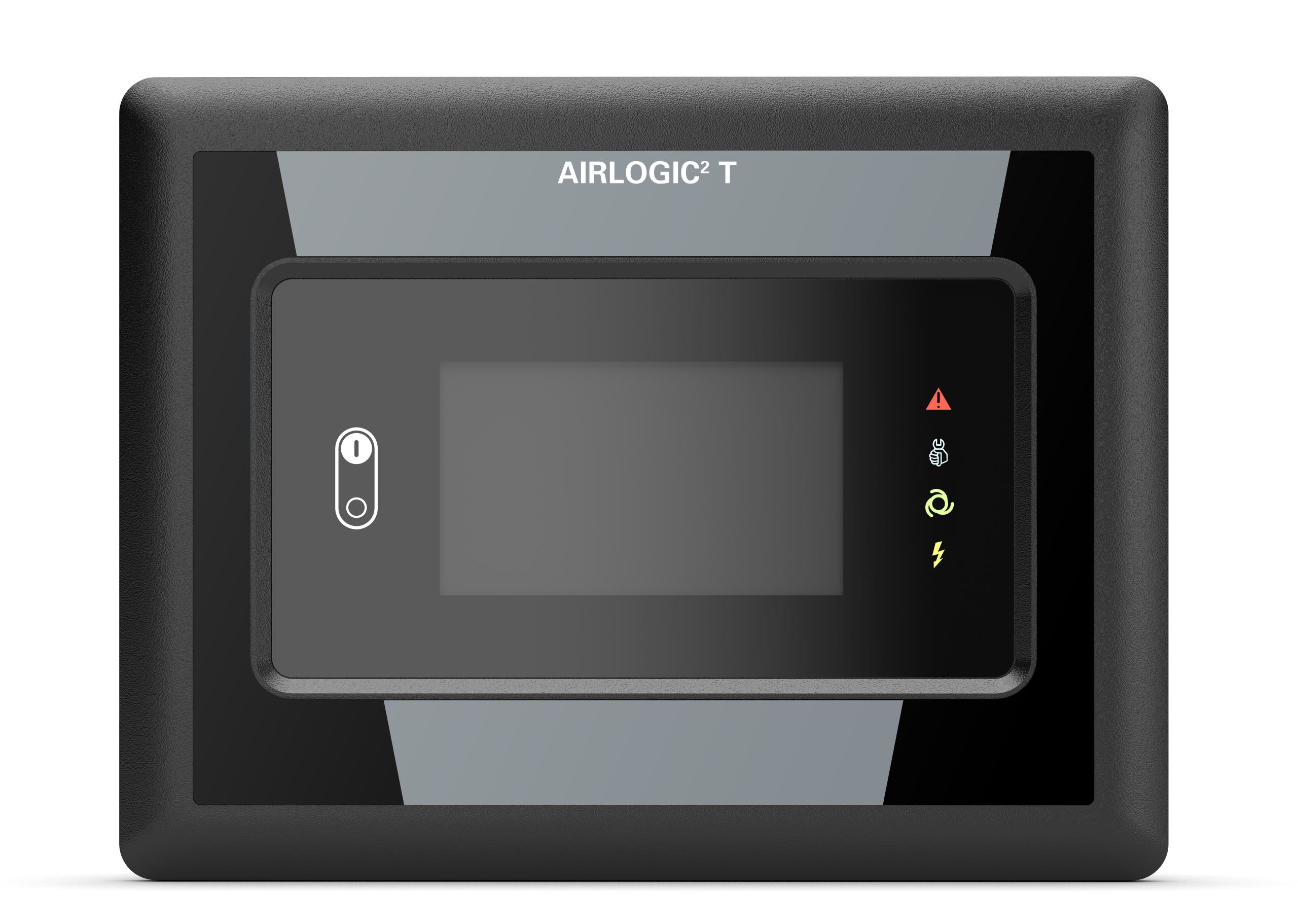
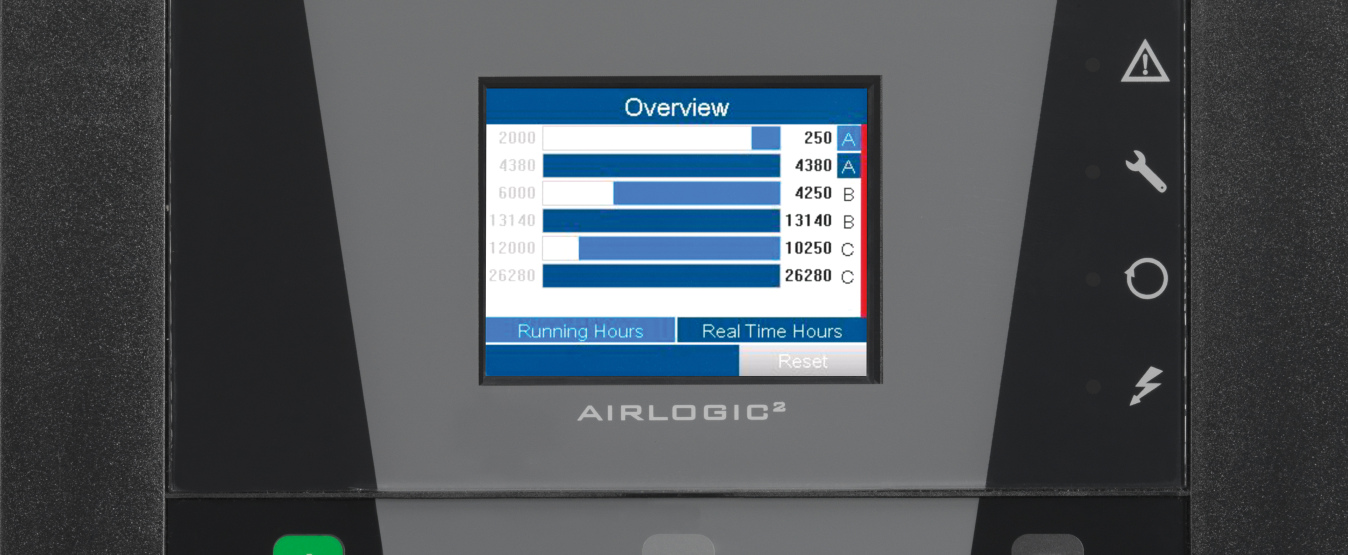
The type of user interface on every control unit is defined by its display. Simpler models use an icon-based LCD display, while more advanced ones have a colour graphic or touch screen. The latter offer a better user experience and show more information at a glance.
All control units share hardware features such as the same level of protection against dust and moisture. The front of the controller is rated IP54 and has an LED status indicator for when the compressor needs servicing, as well as a pre-warning/alarm LED that identifies irregularities and helps protect the compressor in time.
Common software features include setting pressure limits, checking useful data such as operating hours, loaded hours or number of motor starts, remote programming of the machine, and programming automatic restart after a power failure.
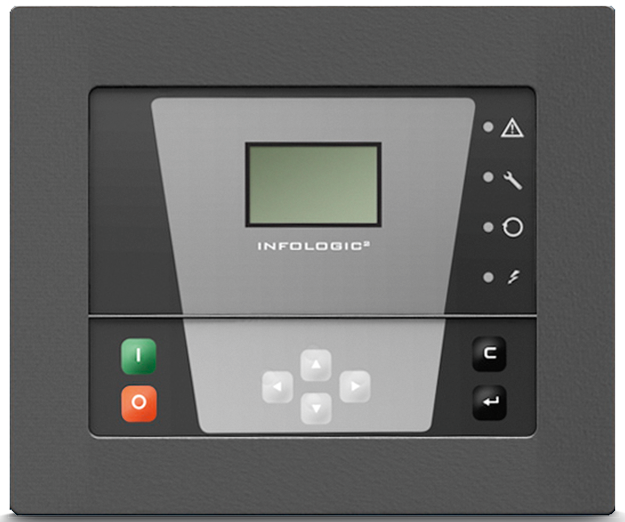
02Specific features of advanced controllers
Advanced controller models offer significant advantages, including:
- Communication with the inverter (for variable-speed operation)
- Additional digital outputs, for example for connecting to a heat recovery system
- Integrated ICONS system – a modem in the electrical panel that transfers information from the controller to a web portal
- Graphic service plan indicator, useful for planning regular services in advance
- Different daily and weekly operating modes – 4 weekly timers, each with 8 different daily settings
- Remote pressure sensor reading, for pressures close to the point of use
- Event history log, useful for analysing past events
As you can see, many types of controller are available, but all control panels allow you to control the compressor, protect it and monitor the components subject to regular maintenance. To get the most out of your compressor, make the controller work for you!