
Focusing on regular maintenance and proper operation is standard practice in most production plants, especially when preparing for the coming winter months. Anyone running equipment for producing and treating compressed air should, when temperatures fall close to or below freezing, be aware of a few simple checks that make sure the production process is properly protected and avoid costly, unnecessary repairs.
01What to keep in mind when the temperature drops
Cold water or condensate from compressed air can become a potential problem area. Whatever type of system you run, the most important thing is to make sure your cooling system is in optimal condition and properly maintained. Check that all condensate drains, pipes and other elements exposed to the cold (located outside the building) are well insulated. Insulation will not only prevent pipes from bursting but also stop condensate from getting into the installation.
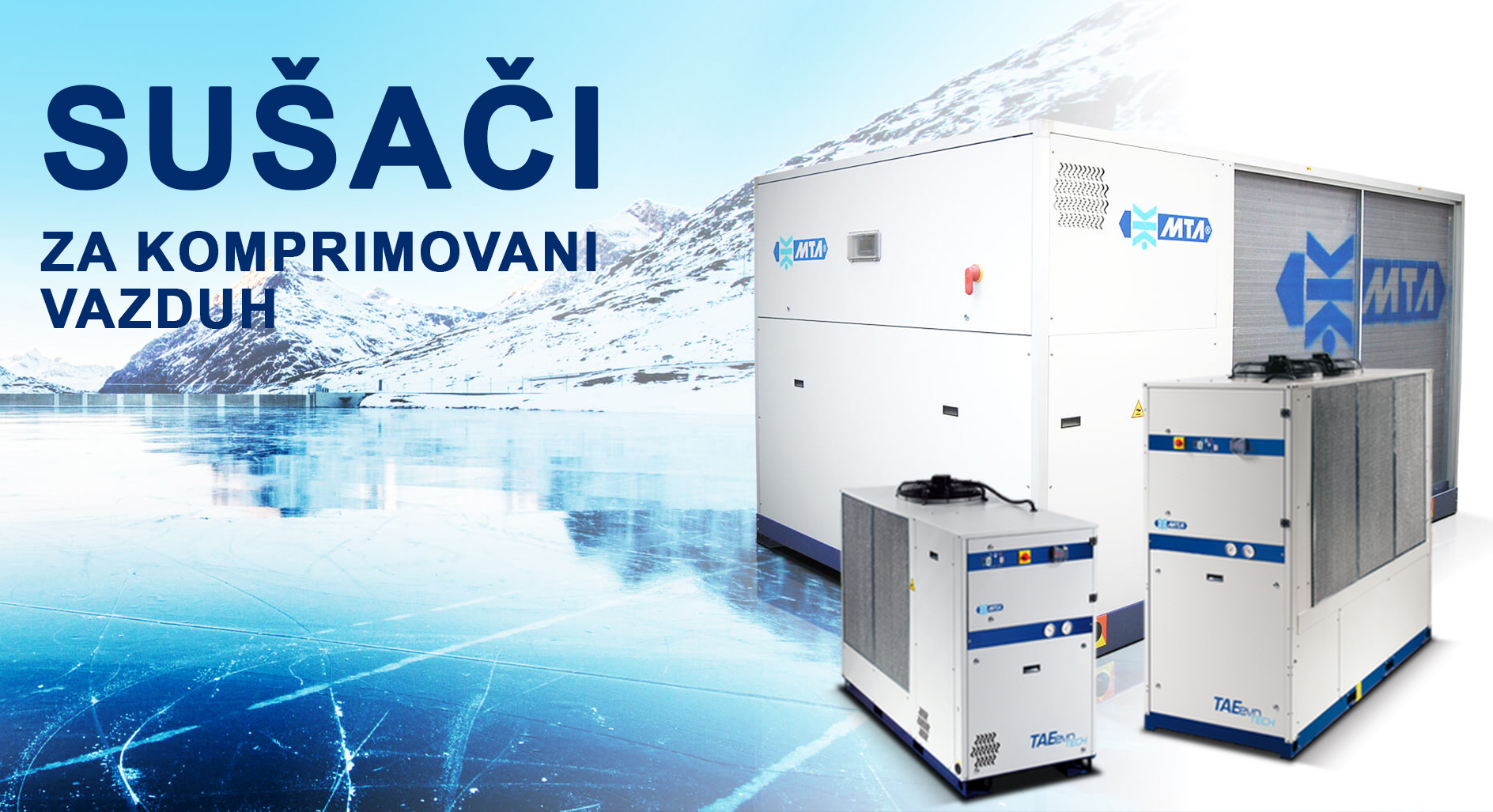
In extreme cases it is useful to add heat sources (heaters around pipes or condensate drains). This is especially useful in installations with a refrigeration dryer whose pipework runs outdoors, at a temperature lower than the dew point the dryer provides – because in this case condensate can form even after the dryer. During very wet (rainy or snowy) periods, make sure all air intake openings are protected from rain and snow.

Useful tip: if a compressor, dryer or oil-water separator is standing idle, drain all remaining water (condensate) from it to prevent it from freezing and possibly cracking parts of the equipment.
02Have you considered a heat recovery system?
During air compression, a compressor also generates a significant amount of heat energy, which can be reused in various processes in the plant. Under optimal conditions, as much as around 80% of the heat generated by compressing air can be reused. A heat recovery system can reduce the cost of producing hot water used, for example, in washrooms or for cleaning, as well as for heating.

03Check your condensate drains
Condensate drains are the part of the installation most often forgotten, and a fault in a drain can lead to problems. Why? Because the basic “job” of a condensate drain (manual or automatic) in a compressor system is to capture and discharge water from the system (compressor, receiver, dryer, filters). Automatic drains play a very important role and often remove the need for manual draining. Precisely because they are automatic, they must be checked and serviced regularly to remain reliably effective over time.

04Maintain in-line filtration regularly
Like condensate drains, in-line filters are often neglected in compressed air systems. Their main role is to ensure the required purity of compressed air, so their elements (cartridges) need to be changed regularly. A dirty filter element prevents the filter from removing water, solid particles and oil from the air, and also causes a pressure drop in the network.
05Find and fix air leaks in the network
It is often very hard to see or hear air leaking from pipes and connection points in the compressed air network. Leaks lead to unnecessary and therefore more expensive compressor operation, which in turn increases compressor wear and the amount of condensate generated. All of this can lead to large pressure drops and compressor downtime. A compressor system efficiency audit will find and locate every leak point, after which you can bring your network back to optimal condition.

06The importance of lubricants
When the ambient temperature is low, oil viscosity rises. That is why it is very important to use the most suitable original oil. Original oils guarantee viscosity indices optimised to keep the oil fluid enough at low temperatures, avoiding problems that can occur when starting the compressor on cold days.