
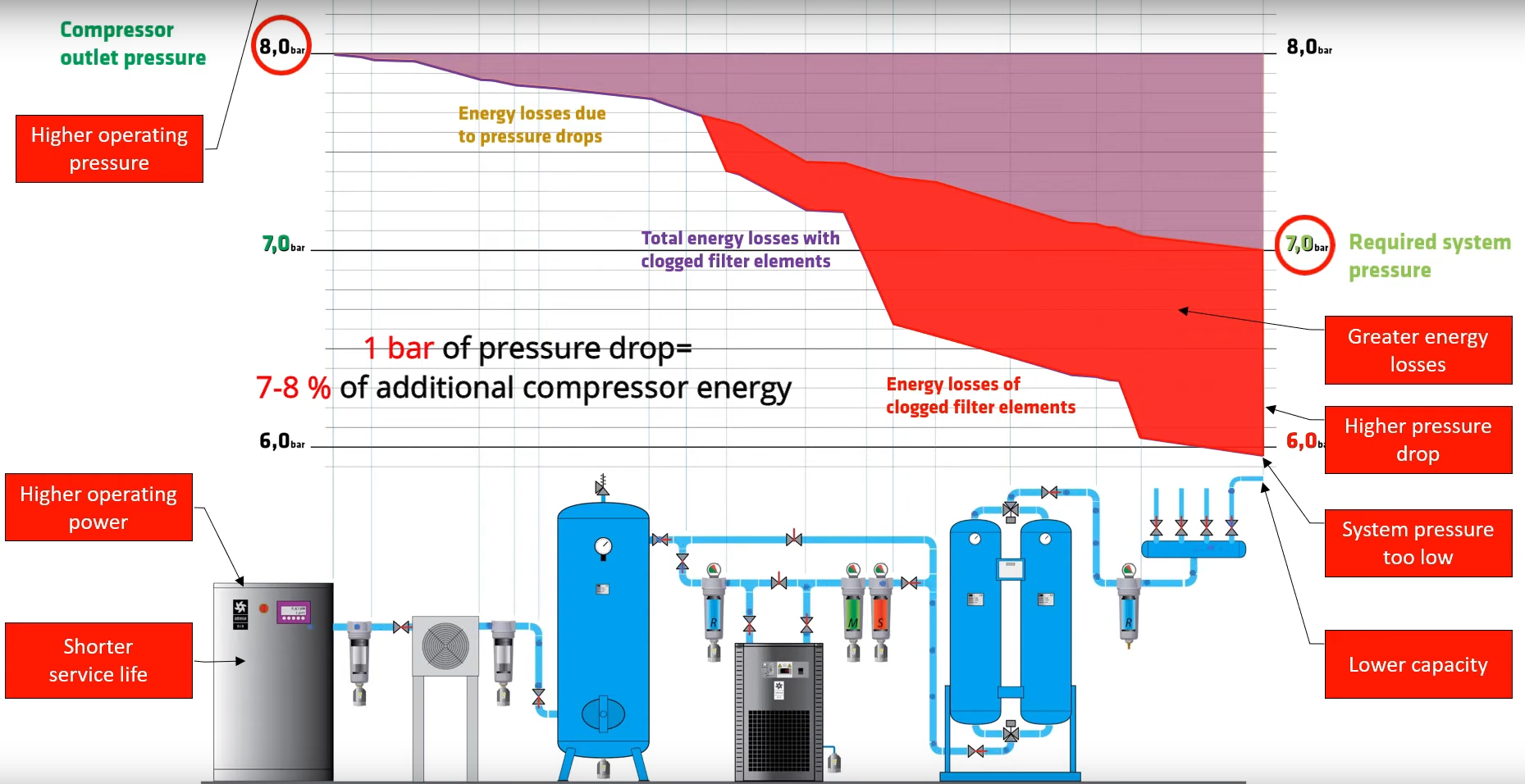
Pressure drop is the reduction in air pressure inside a compressed air system as the air travels from the compressor outlet to the point of use. It occurs as compressed air passes through the distribution system and can happen at any stage between the compressor outlet and the end use. A well-designed compressed air system should ideally keep pressure loss below 10% of the compressor’s outlet pressure.
Pressure drops can reduce the operating efficiency of production processes, affecting energy consumption, operating costs and efficiency. Significant pressure drops can also hurt compressor performance, leading to excessive energy consumption. Since compressed air is an essential and expensive resource in every industry, preventing pressure drop is vital to avoid unwanted increases in energy and operating costs.
01Why is my compressed air system losing pressure?
To keep a constant pressure level in a compressed air system, you need a flawless, closed distribution installation so that compressed air flows freely to the consumers. Any change in this system – loose parts, obstructions or uneven internal surfaces – can disrupt the airflow. These disturbances, which cause fluctuations in compressed air pressure, fall into two basic groups: air distribution problems and problems with air quality components.
Common causes of compressed air pressure drop include:
Compressed air leaks
Air leaks lead to low air pressure, which can disrupt operations and increase operating costs. Leaks can come from the piping and from every connection. They cause pressure drops in the system that affect the performance of tools and equipment powered by compressed air, which can reduce productivity and potentially compromise product quality.
Oil contamination
Oil contamination in compressed air lines can damage seals, with cracking or leaks as the expected result. Oil is especially harmful to plastic components and very often causes them to crack.
Lack of staff training
Train your staff on the importance of detecting leaks in the compressed air system and how to report them. This encourages a culture of energy efficiency and conservation.
Need for repair
Faulty parts such as intake filters, fans, manifolds and switches often cause pressure drops in air compressors.
Flow problems
Flow problems in compressed air systems can be caused by various factors, such as faulty hose connectors, low-reading gauges and clogged intake filters. These problems disrupt the flow, leading to inefficiency and reduced performance.
02How to minimise pressure drop in compressed air systems

Designing the system as part of one larger whole and maintaining it regularly are essential to minimise pressure drops. Aftercoolers, moisture separators, air dryers and other air treatment components should be included in the system design to ensure the lowest possible pressure drop and maximum operating efficiency. Recommended maintenance best practices should be followed and recorded after installation to keep pressure drops to a minimum.
In addition, compressed air users can consider the following strategies:
- Redesign your compressed air system. Design the distribution system properly and try to eliminate as many intermediate components as possible.
- Check distribution components. Inspect hoses and pipes for flow problems such as kinks, folds or holes that can reduce pressure. Replace parts if you notice any defects.
- Maintain in-line compressed air filters. To reduce the effects of moisture, such as pipe corrosion, maintain air filters and dryers regularly. Clean filters regularly and replace them when they are clogged or dirty.
- Replace faulty parts. Inspect dryers, separators and aftercoolers regularly to make sure they work properly, and replace them when they fail or stop working efficiently.
- Minimise the distance air travels. Pressure drops occur when air travels long distances. Shorten the route through the distribution system, keep the number of hoses and connectors to the minimum needed and avoid components that lengthen the air path.
- Reset the pressure regulator. Change the pressure regulator settings on your compressor to avoid wasting energy, and replace the regulator with a new model if the pressure loss continues.
- Leak management programme. Consider a comprehensive leak management programme with regular checks, leak tracking and performance measurement to keep improving the efficiency of the system.
What do you get from an audit? Measurement of the efficiency of the compressor and every component in the compressor system, detection and marking of leak points on the network, a report calculating the exact energy (and money) losses, and proposals for the necessary changes, with their cost and a return-on-investment calculation.
More about our analyses and measurements: tehnogama.com/ekspertske-analize